

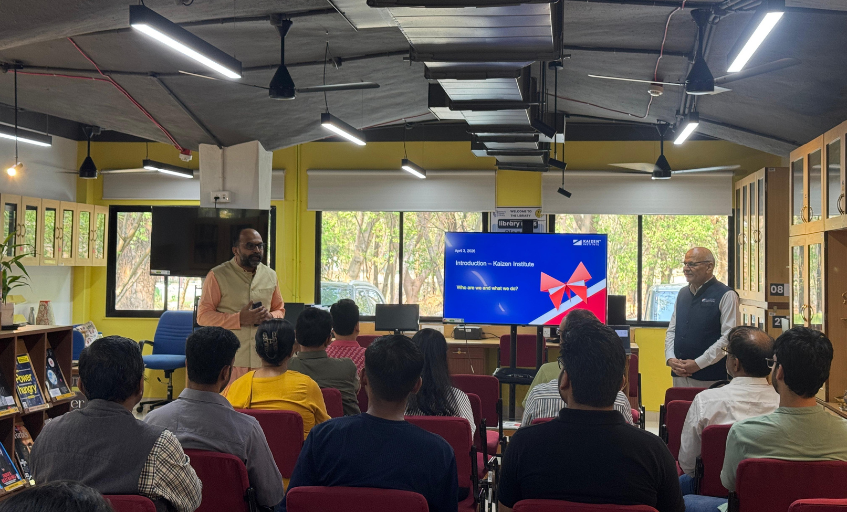
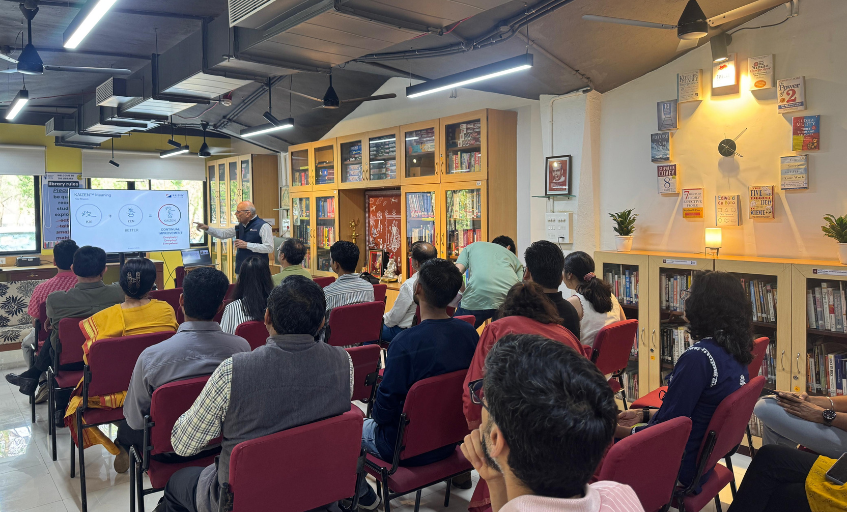
How do organizations actually change—through sweeping transformation programs or through small, consistent shifts that compound over time? This question anchored a recent Journal Club session at the Venture Center Library, designed under its Think and Link – Link and Think format—bringing two distinct perspectives into conversation. One focused on Kaizen and operational excellence; the other on how a single high-impact behavior can reshape culture. Together, they framed a larger inquiry: is culture built through systems, or triggered through behavior?
Kaizen, Beyond the Buzzword
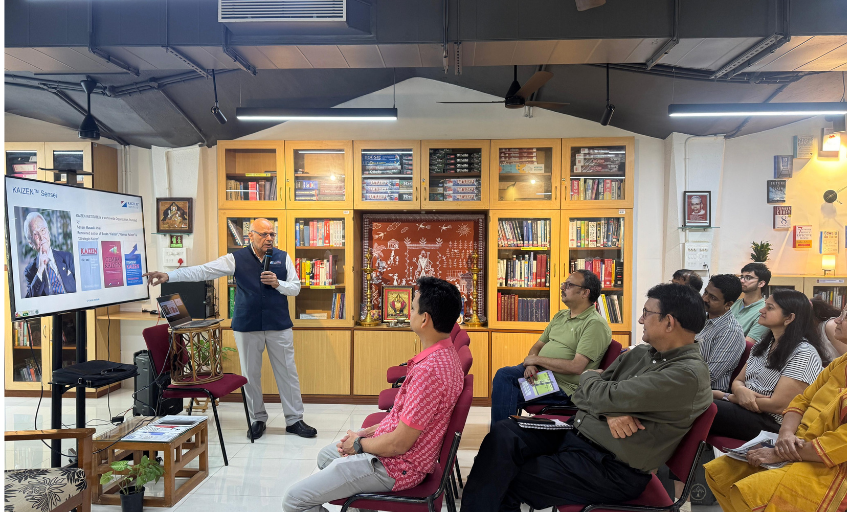
Kaizen, a Japanese philosophy shaped and popularized by Masaaki Imai, translates to change for the better. In practice, it refers to continuous, incremental improvement embedded into everyday work. It gained global recognition through the Toyota Production System, where improvement is built into daily operations—driven by frontline workers, supported by management, and reinforced through practices such as standard work and visual management.
Unlike traditional approaches that focus on fixing problems after they arise, Kaizen emphasizes improving processes even when they appear to be functioning well. The goal is not disruption, but sustained excellence.

Masaaki Imai, a Japanese organizational theorist, brought Kaizen into the realm of business, grounding it in the idea that meaningful outcomes emerge from the steady accumulation of incremental improvements over time.
From Framework to Practice: Inside the Session
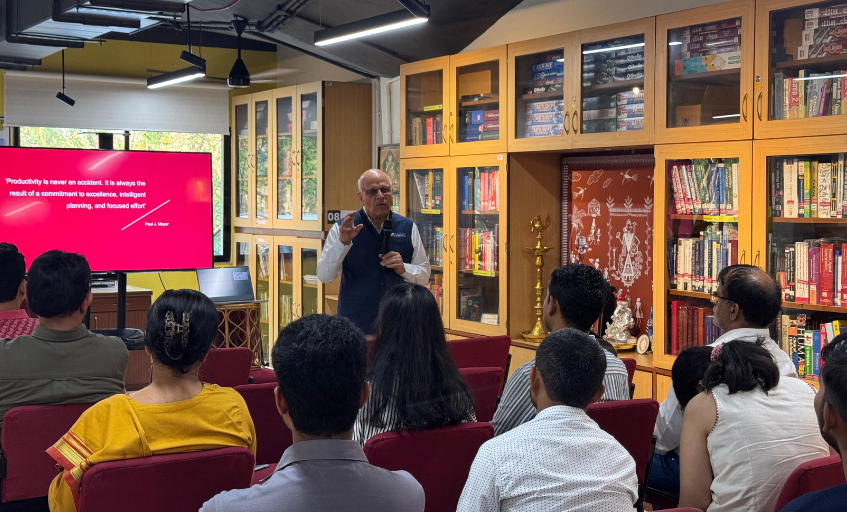
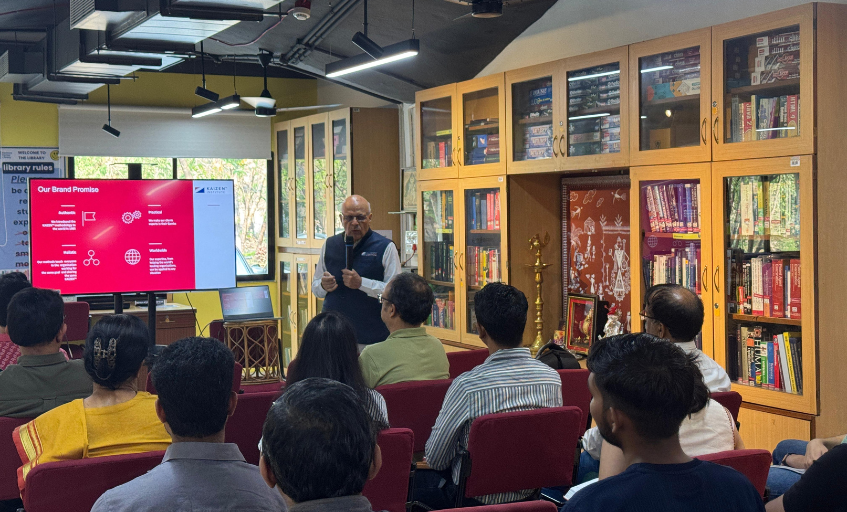
The session was led by Dr. Arvind Kulkarni, Partner & Director – India Operations at the Kaizen Institute. With over five decades of experience across HR, operations, and change management, his insights drew from direct engagement with organizations navigating long-term transformation.
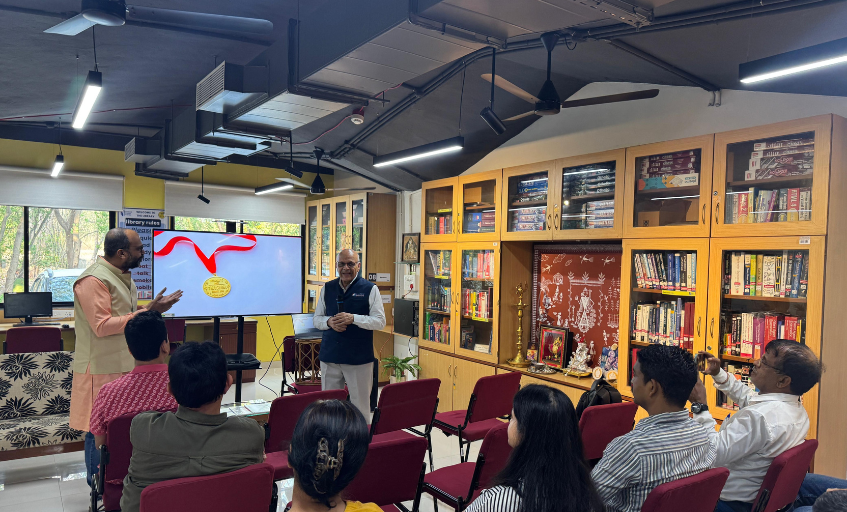
Also part of the session was Mr. Jagdish Bennale, a biotech entrepreneur with experience across global markets. His perspective introduced a complementary dimension—focusing on how specific behaviors within organizations can act as catalysts for broader cultural change.
When Strategy Isn’t Enough
The relevance of Kaizen becomes clearer when viewed against organizations that struggled to adapt. Companies like Kodak and Nokia were not short on strategy or resources—Kodak had already built a digital camera prototype as early as 1975 but hesitated to scale it, wary of disrupting its film business, while Nokia continued to back its Symbian operating system even as touchscreen, software-led ecosystems began to redefine the mobile market. What they lacked was continuous internal evolution. Strategy defines direction, but it is consistent improvement that sustains relevance.
Kaizen also addresses the needs of three key stakeholders within any organization. Customers seek value, employees seek meaningful and engaging work, and shareholders seek returns. By focusing on efficiency, quality, and continuous refinement, Kaizen attempts to create alignment across these interests.

Gemba: Leadership Without Distance
A central concept within Kaizen is Gemba—the “real place” where work happens. It emphasizes that understanding processes requires direct observation rather than reliance on reports or summaries. For leadership, this translates into active involvement. “Walk the talk” becomes a practical requirement rather than a symbolic statement.
However, this is also where implementation becomes challenging. Engaging with Gemba requires time and a willingness to confront inefficiencies directly. Without this, Kaizen risks becoming theoretical.
Culture Is What Repeats
Organizational culture is not what is stated, but what is consistently done. Kaizen attempts to shape this by embedding improvement into routine activities. This requires sustained commitment, supported by a cycle: effort leads to results, results build belief, and belief reinforces further effort.
The difficulty lies in maintaining this cycle. If results are not visible or leadership does not reinforce the process, the effort weakens. In such cases, Kaizen may be adopted in form but not in substance.
What Kaizen Looks Like on the Ground
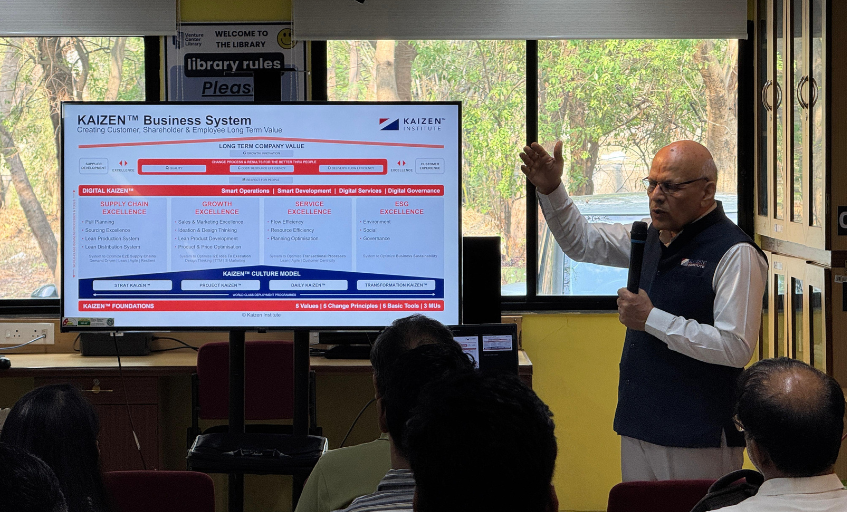
Kaizen approaches improvement with precision by identifying inefficiencies through three core lenses—Muda (waste), Mura (imbalance), and Muri (overburden). Together, they highlight where systems lose efficiency, become uneven, or place excessive strain on people and processes.
This is further detailed through the seven wastes of Muda—overproduction, waiting, transportation, overprocessing, inventory, motion, and defects—each representing a specific point where value is eroded. Rather than addressing these in isolation, Kaizen emphasizes consistent identification, root cause analysis, and disciplined correction as part of everyday work.

Where Implementation Breaks Down
Kaizen is not universally easy to implement. Its success depends on leadership commitment, organizational mindset, and the ability to prioritize long-term improvement over immediate results. In environments driven by short-term targets or rigid hierarchies, Kaizen may be reduced to superficial practices without meaningful change.
Adopting the language of Kaizen does not guarantee its outcomes. Without alignment between intent, behavior, and systems, it remains underutilized.
On Urgency and Action
An example shared during the session illustrates this clearly. When a zebra encounters a lion, it runs immediately. There is no delay. Organizations, however, often hesitate—waiting for alignment or perfect conditions. While deliberation is necessary, excessive delay can hinder responsiveness.
Where Ikigai Meets Kaizen
If Ikigai helps define what is worth pursuing, Kaizen determines whether that pursuit can endure. Purpose may set direction, but continuous improvement sustains it against time and complacency. As Dr. Kulkarni noted, Kaizen is about removing the mess out—and ensuring that the mess stays out. The first is effort; the second is discipline. And it is in that discipline that purpose is either preserved—or quietly lost.
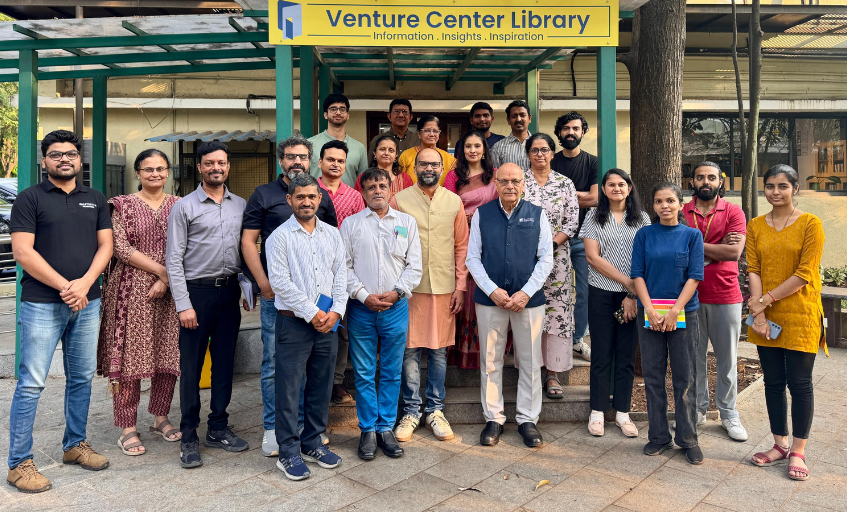
The Venture Center Library regularly curates such cross-disciplinary discussions for its members. Join the library and the WhatsApp group to stay connected with upcoming sessions and conversations.