

What does it take to prepare deep-tech innovators for the world?
Every year, laboratories produce remarkable discoveries with the potential to transform healthcare, manufacturing, sustainability, and countless other sectors. Yet only a small fraction of these innovations make it beyond the laboratory. The challenge is seldom the science itself. More often, it lies in the journey that follows—understanding markets, navigating regulations, protecting intellectual property, securing investment, and building the partnerships needed to turn an invention into a viable business.
This is why innovation ecosystems matter.
Programmes like the Royal Academy of Engineering's Leaders in Innovation Fellowships (LIF) Global Programme recognize that great technologies alone are not enough. Deep-tech entrepreneurs also need exposure to global markets, access to experienced mentors, opportunities to learn from mature innovation ecosystems, and networks that can help accelerate commercialization. By investing in founders as much as their innovations, programmes like LIF strengthen not only individual ventures but the broader ecosystems that support them.
This year, Venture Center had the privilege of serving as India's In-Country Partner (ICP) for LIF Global 2026. It was a role that extended far beyond programme coordination. From engaging innovators across the country and supporting the application and evaluation process to hosting the in-country programme and representing India during the UK Residential Programme, Venture Center helped build the foundation for India's participation in one of the world's leading deep-tech entrepreneurship initiatives.

Global Opportunities Require Local Leadership
International programmes succeed because of strong local partners.
As the India In-Country Partner, Venture Center worked closely with the Royal Academy of Engineering to identify, prepare, and support Indian innovators throughout the programme. This included promoting the national call for applications, engaging with prospective entrepreneurs, facilitating the evaluation process, coordinating with the Royal Academy of Engineering, and organizing the in-country programme that brought the selected cohort together before their international immersion.
These responsibilities were not simply logistical. They ensured that founders entered the programme with a clear understanding of its objectives while helping showcase the depth and diversity of India's rapidly evolving deep-tech ecosystem. Strong international partnerships are built on equally strong local ecosystems, and the role of an In-Country Partner is to connect the two.
Selection Is Only the Beginning
Being selected for a prestigious international fellowship is often seen as the destination. In reality, it marks the beginning of a new phase of learning.
The Indian cohort included entrepreneurs developing solutions across healthcare, diagnostics, environmental sustainability, medical technologies, digital health, and advanced engineering. Venture Center-supported startups—including Diagopreutic, Revy Environmental Solutions, Ripple Healthcare, Renu MedTech, Periwinkle Technologies, and WeInnovate Biosolutions—reflected both the diversity of Indian deep-tech innovation and the growing ambition of founders building globally relevant technologies.
The programme encouraged founders to look beyond technology development and consider the broader aspects of entrepreneurship—commercialization strategies, regulatory pathways, customer discovery, intellectual property, investment readiness, and international collaboration. In doing so, it reinforced an important idea: scientific excellence creates opportunities, but entrepreneurial readiness creates impact.
What Innovation Ecosystems Can Learn From Each Other
For Venture Center, the UK Residential Programme was not simply an opportunity to accompany the Indian cohort. It was an opportunity to learn from organizations that have spent decades building successful innovation ecosystems.
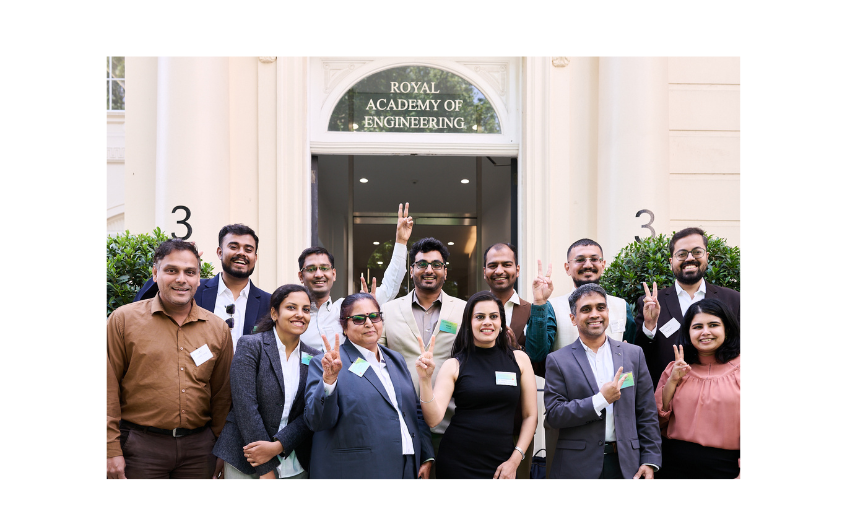
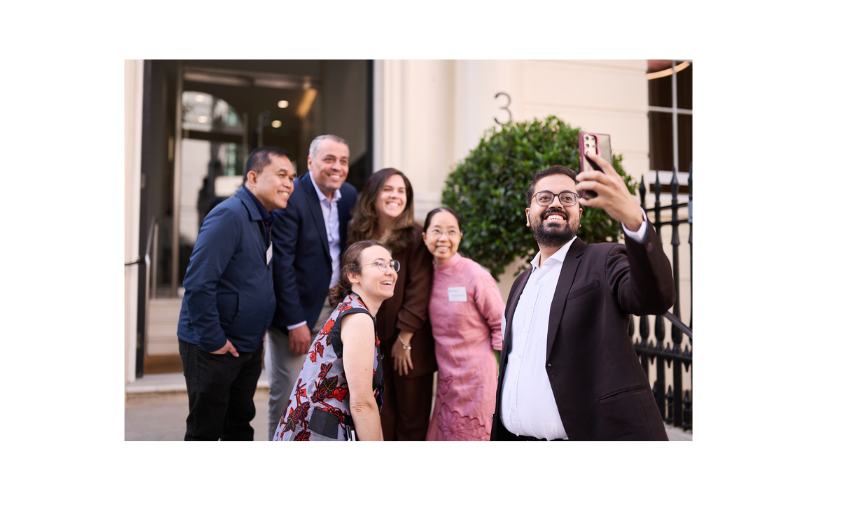
Representing Venture Center as India's In-Country Partner, Dr. Manish Gore, Associate Manager – Incubation and Regulatory Services, participated in the week-long programme alongside innovators and ecosystem representatives from India, Brazil, Jordan, the Philippines, and Vietnam.

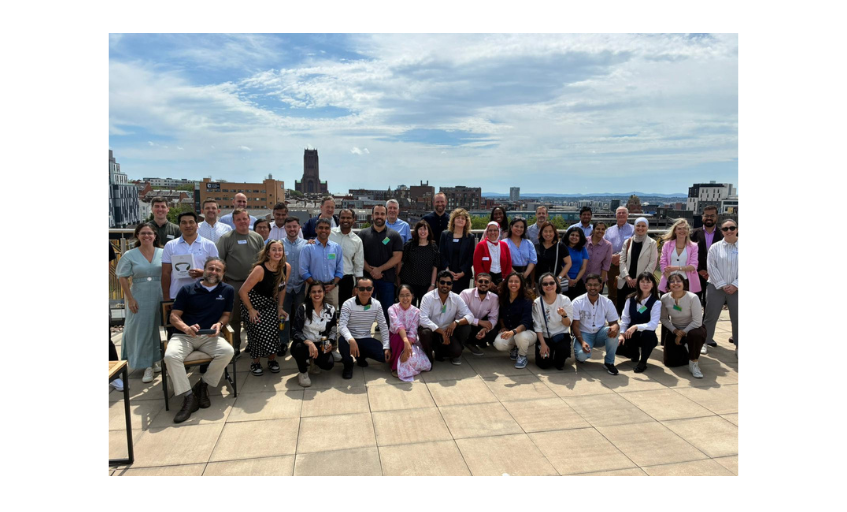
The programme included visits to the London Institute for Healthcare Engineering at King's College London, Venture Café London, Central Tech Liverpool, the Business & Intellectual Property Centre Oxfordshire, as well as interactions with organizations such as Innovate UK, the Medicines Discovery Catapult, the Centre for Process Innovation, and the Liverpool School of Tropical Medicine. Together, these engagements demonstrated how universities, industry, investors, policymakers, incubators, and entrepreneurs work in concert to translate research into products and businesses with global impact.

The visit also opened conversations on future collaboration. Discussions with Ana Avaliani, Director of Enterprise at the Royal Academy of Engineering, highlighted opportunities to strengthen ties between the Royal Academy of Engineering and Venture Center while expanding international pathways for Indian innovators.

Reflecting on the experience, Dr. Manish Gore said:
"Representing Venture Center as the India In-Country Partner at LIF Global 2026 provided an invaluable opportunity to engage with globally recognized innovation ecosystems and learn from organizations that have successfully translated research into impactful ventures. The programme reinforced the importance of international partnerships, global networks, and entrepreneur-focused support in accelerating technology commercialization. We look forward to leveraging these insights to create greater opportunities for Indian deep-tech entrepreneurs."
For Venture Center, these learnings are already shaping conversations around incubation, founder development, and international engagement. The value of programmes like LIF lies not only in what participants experience abroad, but also in how those experiences strengthen the support available to future entrepreneurs back home.
Recognition That Reflects an Ecosystem
The true measure of programmes like the Leaders in Innovation Fellowships (LIF) lies not only in the innovations they showcase, but in the confidence, capabilities, and global outlook they instil in entrepreneurs. The culmination of this journey was the LIF Global Pitching Event, where approximately 49 finalists from seven participating countries presented their technologies before an international panel of investors, industry experts, and innovation leaders.

Among this highly competitive cohort, Dr. Anupama Engineer, Chief Operating Officer of Venture Center incubatee WeInnovate Biosolutions Pvt. Ltd., received the Best Pitch Award for SilvoGuard™, the company's portfolio of antimicrobial medical devices powered by its patented NanoAgCide™ technology for infection prevention and control.

For Anupama, however, the programme's greatest value extended beyond the recognition itself. Engaging with innovators, mentors, and experts from across the world provided invaluable insights into technology commercialisation, global market access, and strategic business growth, while exposing participants to diverse approaches to innovation and entrepreneurship. Presenting alongside some of the most promising technology ventures from seven countries—and ultimately receiving the Best Pitch Award—reinforced WeInnovate Biosolutions' belief that technologies developed in India can compete confidently on the global stage. Equally important, the experience strengthened the company's ambition to pursue international partnerships and accelerate its global market expansion, while reaffirming the value of the incubation support and ecosystem that helped prepare it for opportunities like LIF.
The achievement serves as a reminder that global recognition is rarely the result of a single pitch. It is built over months—and often years—of mentoring, preparation, collaboration, and ecosystem support, enabling entrepreneurs to translate scientific innovation into solutions with worldwide relevance.
Bringing the Learning Home
The impact of programmes like LIF Global is rarely confined to the duration of the fellowship. Their true value lies in the ideas exchanged, the relationships built, and the lessons carried forward.
Founders return with broader perspectives on commercialization, stronger international networks, and a deeper understanding of what it takes to scale innovation globally. Institutions return with insights that can strengthen incubation programmes, improve founder support, and foster new collaborations. Together, these outcomes contribute to an ecosystem that is better equipped to help future innovators succeed.
For Venture Center, serving as India's In-Country Partner reaffirmed a simple but powerful idea: innovation does not thrive in isolation. It flourishes when researchers, entrepreneurs, incubators, investors, policymakers, and global partners work together with a shared purpose.
Because, in the end, it takes more than a breakthrough to change the world.
It takes an ecosystem.