

Performance is a state of being, not a single event.
A marathon does not begin at the starting line, nor does it end at the finish. It is not a singular event, but a state of being—a continuous loop where the physical and the strategic are inextricably linked. For Seetharaman Rajamani, this is the reality shared by both the long-distance runner and the entrepreneur: performance is never an isolated act of will, but the inevitable output of a total system.

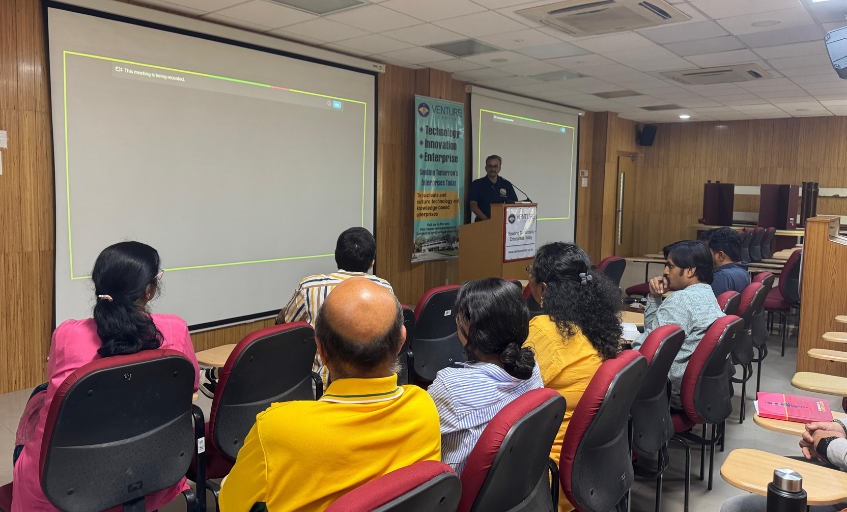
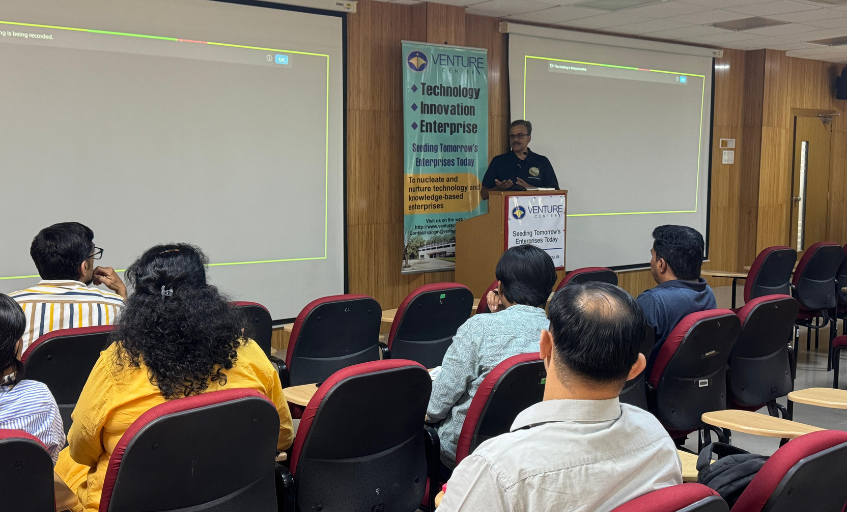
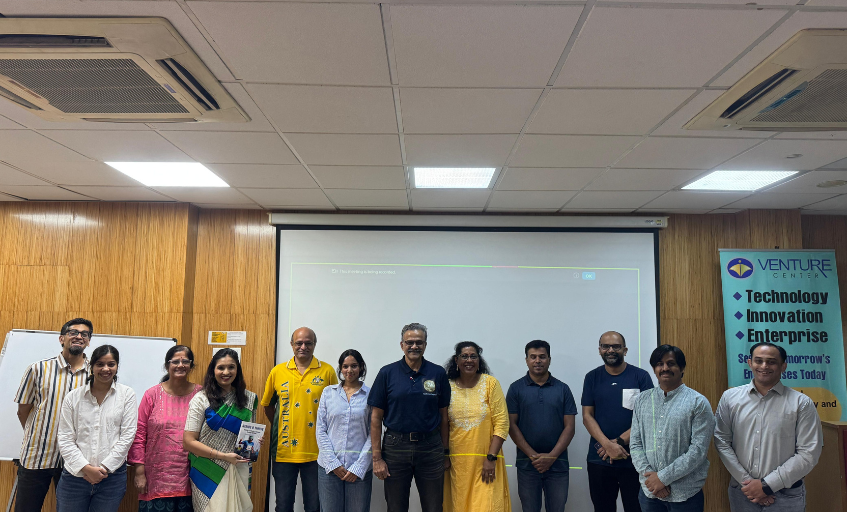
This was the central insight at a recent author talk at the Venture Center Library, where Rajamani discussed the philosophy behind his book, Stride and Thrive. An engineer and entrepreneur by trade with over 27 years of experience in major corporations like Havells and Wipro, Rajamani’s journey began with a deliberate decision to disrupt a sedentary lifestyle. What he discovered on the pavement was a profound technical parallel: the "metabolic efficiency" required to sustain a human body for 42 kilometers is identical to the "operational efficiency" required to sustain a business through its first decade.

In Rajamani's world, running is not a metaphor—it is a live-action laboratory for business logic. This realization provides a seamless segue into a deeper exploration of how we build ourselves.
Engineering the Habit: The Unseen Foundation
Success in any field starts with the unglamorous work of building a core identity. In the first section of his book, Rajamani explores the cultivation of habits, arguing that the shift toward discipline and consistency is the most difficult "mile" to run. In the startup world, this represents the transition from a vague idea to a structured, repeatable operation.
It is a founder’s prerogative to choose their initial pace, but if the foundation isn't built on a "set pattern" of preparation and clear goal-setting, the structure will eventually buckle. You cannot run a sub-four-hour marathon if your cardiovascular base is non-existent, just as you cannot scale a venture on a weak product-market fit. Success is decided by the integrity of the unseen groundwork laid months before the public launch. This foundational phase isn't just about starting; it’s about recalibrating your internal metrics to prioritize long-term stability over short-term gratification.
The Training Block: Iteration as a Growth Muscle
As the journey progresses, the narrative shifts from internal habits to external execution. This is where the physical progression of a training block mirrors the iterative nature of business testing. Rajamani describes a journey that begins with a simple "step out and walk" and evolves into the complexity of intervals and hill repeats. In the corporate arena, this looks like the "Minimum Viable Product" (MVP) approach—testing the stress points of a product in controlled bursts before committing to a full-scale "race."
Just as a runner must master breathing and hydration to avoid a mid-race collapse, a founder must master the "metabolic rate" of their capital and resource management. If you haven't built the organizational muscle to absorb a pivot or a "hill repeat" in the market, the first major market shift will result in a fatal injury. This is why Rajamani emphasizes that moving fast is secondary to structural integrity; the training block is where you reveal weaknesses before they become catastrophic.
The Collective Stride: Community and Recovery
However, the "Unified Stride" is not a solitary pursuit. Much like a runner relies on a pack to maintain pace, an entrepreneur requires a robust ecosystem of teamwork and community. Rajamani illustrates this by weaving in the success stories of others—like Jay Mali and Preethi Narayan—proving that "thriving" is a non-linear, collective process. These stories serve as a reminder that continuous improvement and the celebration of milestones are the actual engines of growth.
In both the book and the boardroom, the most significant "gains" are often made during the recovery phase. In running, muscle is built during rest, not just during the workout itself. The workout provides the stimulus, but the recovery provides the adaptation. In business, the adaptation happens when a team stops to analyze the data from a failed campaign or a successful launch. This feedback loop—this period of active reflection—is the difference between a one-hit wonder and a sustainable enterprise. Rajamani’s philosophy suggests that if you aren't scheduling time for reflection, you aren't actually training; you are simply wearing yourself out.
The Blueprint for Total Endurance
In the end, the run only reveals what the training has already built
Ultimately, Stride and Thrive serves as a blueprint for this integrated existence. It reminds us that the finish line is not where success is created; it is merely where the totality of your internal systems—your habits, your training, and your community—becomes visible to the world.
Whether on the track or in the boardroom, the discipline of the stride and the resilience of the thrive are one and the same. What we build in the quiet determines how well we perform in the light. This is the ultimate lesson of the unified stride: the race is never truly over, and the preparation never truly stops.
No stride is sustained alone, and no journey of thriving is built in isolation.
Through the Venture Center Library, these conversations continue to evolve. Join the Venture Center Library and its WhatsApp community to stay in step.