

“Potential is assumed for some. Proven for others.”
There is a very specific genre of commentary reserved for women in science. It usually arrives uninvited.
“You can code?”
“Women are not really wired for physics.”
“Oh wow, you are a scientist? I never would have guessed.”
“So much makeup… are you actually in research?”
“Why a PhD if you are going to get married?”
None of these statements qualify as headline sexism. They are softer. Polite, even. Wrapped in curiosity. Delivered with a smile.
And that is precisely why they linger. They do not explode. They accumulate.
Micro-aggressions rarely derail careers in one dramatic moment. Instead, they drip quietly into confidence, self-perception, and that persistent question many women carry:
Do I really belong here?
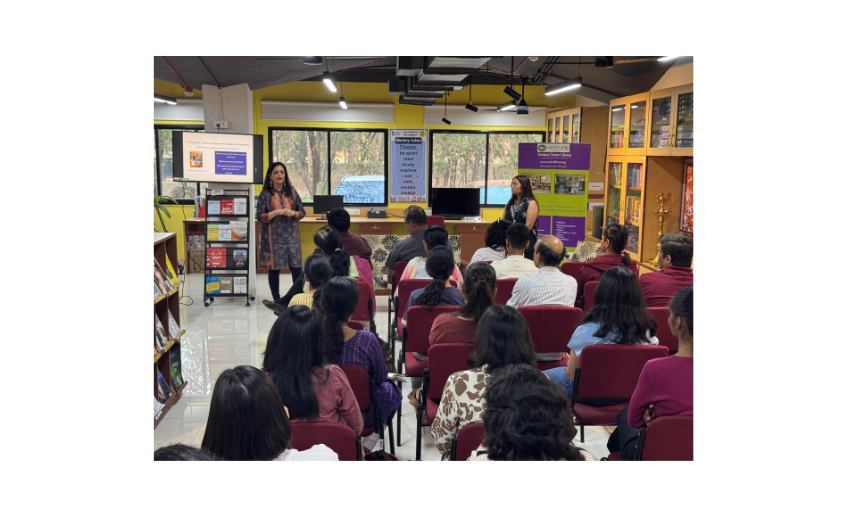
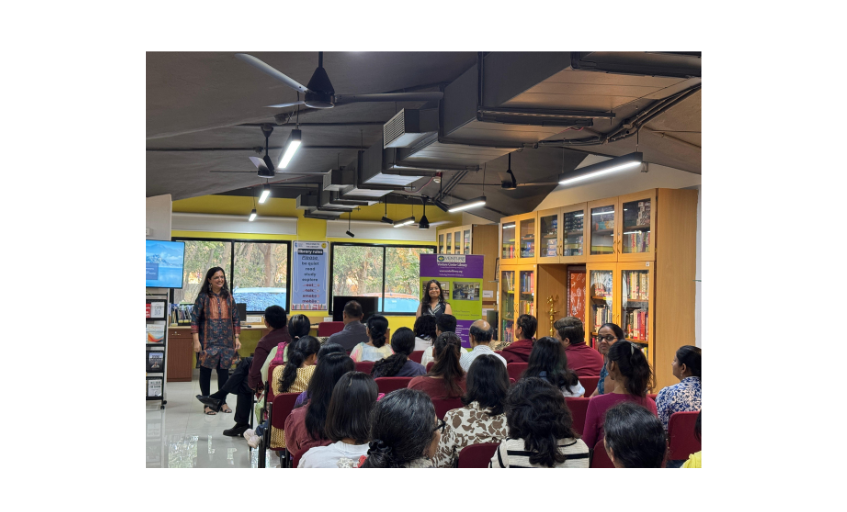
Which is why Venture Center’s recent author talk struck an immediate chord.
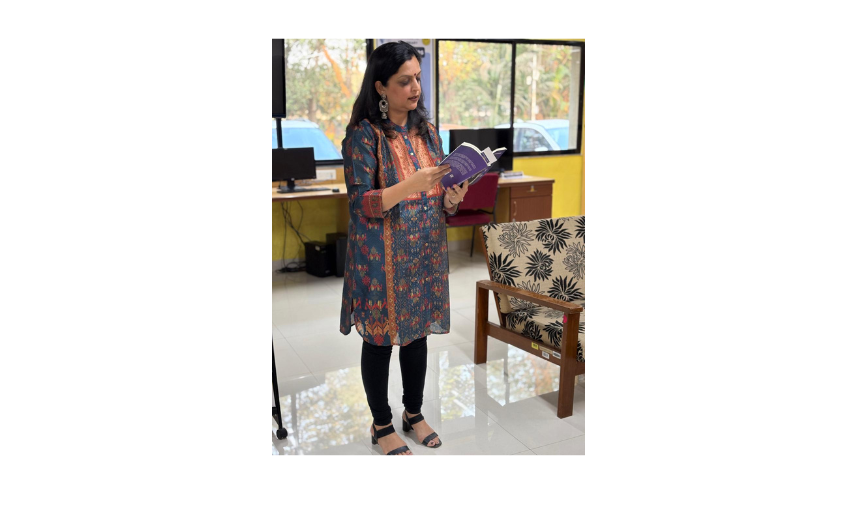
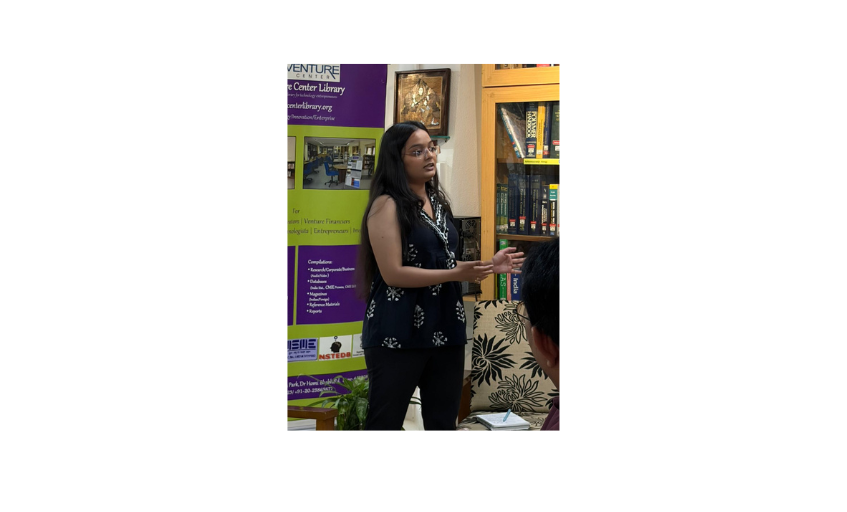
Because when Dr. Karishma Kaushik took the stage, she did not begin with credentials. She began with humour, stories, and disarming honesty — and with something even more powerful: recognition.
STEM, Stats, and the Global Momentum
From lived experiences, the conversation widened to the global STEM landscape.
Over the past decade, STEM education has evolved into a worldwide developmental priority. The UN Sustainable Development Goals have reinforced the role of science, technology, and innovation — not only as engines of economic growth, but as pathways toward greater gender equity.
China today produces the largest share of STEM graduates globally, accounting for roughly 40% of STEM degrees. India contributes about 30%, while the United States represents close to 20%. Countries such as Germany, the UK, France, South Korea, Japan, and others continue shaping high-impact research ecosystems.
India’s trajectory tells a story of progress layered with complexity.
More women are entering STEM programmes than ever before. Classrooms approach parity. Yet as careers progress, representation narrows.
The Leaky Pipeline remains stubbornly real.
But what causes the leak?
Rarely a single barrier. More often, a gradual accumulation of structural and cultural pressures — unequal access to high-visibility opportunities, performance evaluated through a stricter lens, and potential expected to be proven rather than presumed.
The Scenic Route (Because Careers Rarely Behave)
Against this backdrop, Dr. Kaushik’s journey felt refreshingly honest.
Born in Mumbai to a physician mother and lawyer father, her decision to pursue medicine came barely three months before medical entrance exams. No lifelong blueprint. No perfectly plotted plan. Just a decision — and resolve.
Medicine led to an MD, and life unfolded in parallel: marriage, relocation to the United States, and the pursuit of a clinical career. What looked like stability became the starting point for another bold pivot — a PhD, undertaken not after everything aligned, but in the middle of it all, with a young child and the full chaos of research and parenthood.
Because life, as she reminded us, rarely respects timelines.
Her candour about uncertainty resonated deeply. She spoke openly about adapting when circumstances shifted, pivoting when needed, and remaining open to change. In a culture obsessed with linear success trajectories, this honesty felt quietly liberating.
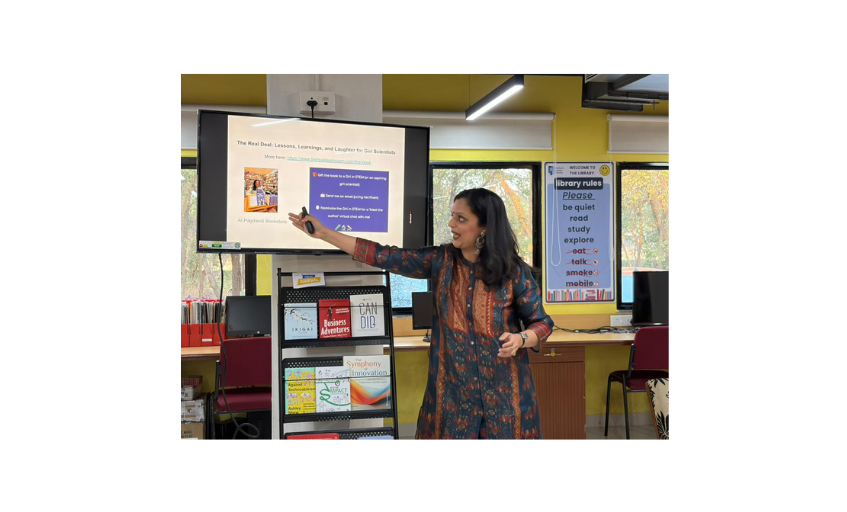
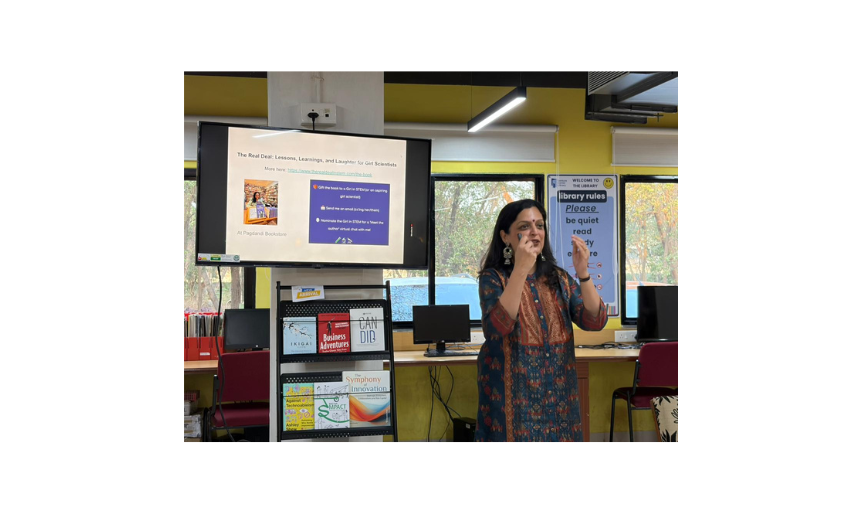
The Myth of the Self-Made Scientist
Running through her story was a constant: support systems matter. Parents who backed unconventional choices. A partner willing to recalibrate his own path. Family structures that made endurance possible. Success, she reminded us, is rarely built alone. Needing support is not weakness; it is simply how real lives work.
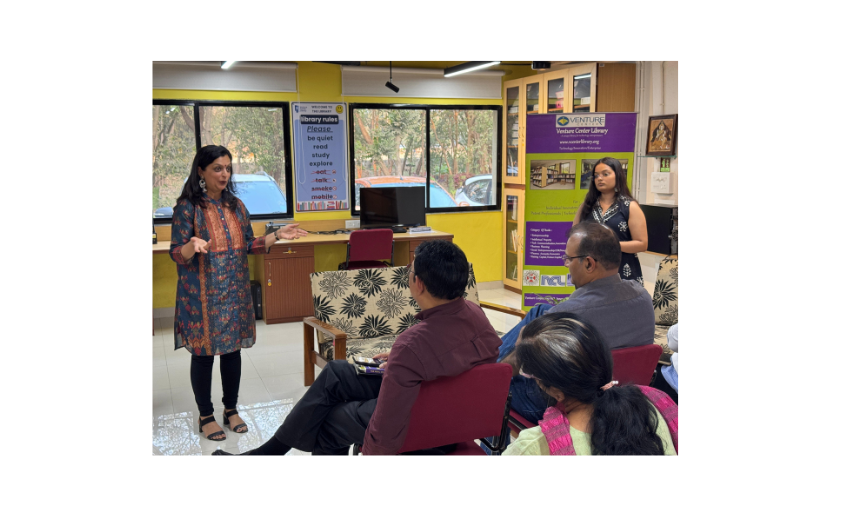
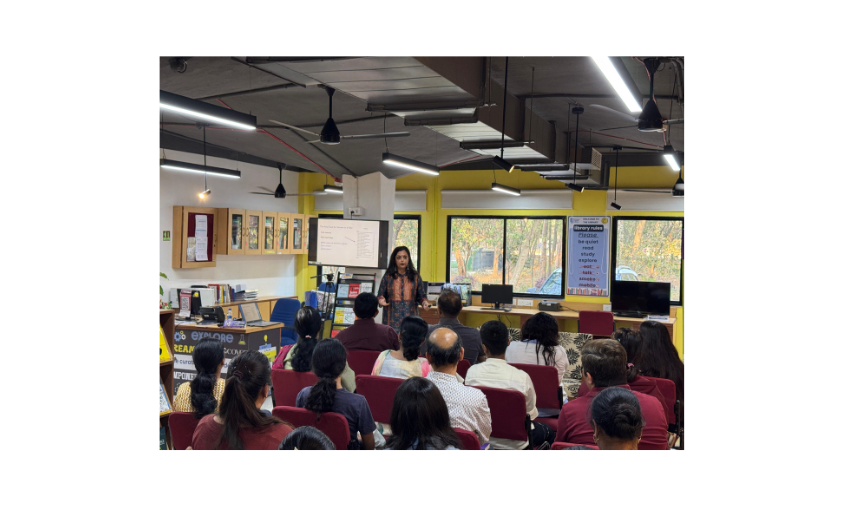
Where the Conversation Deepened
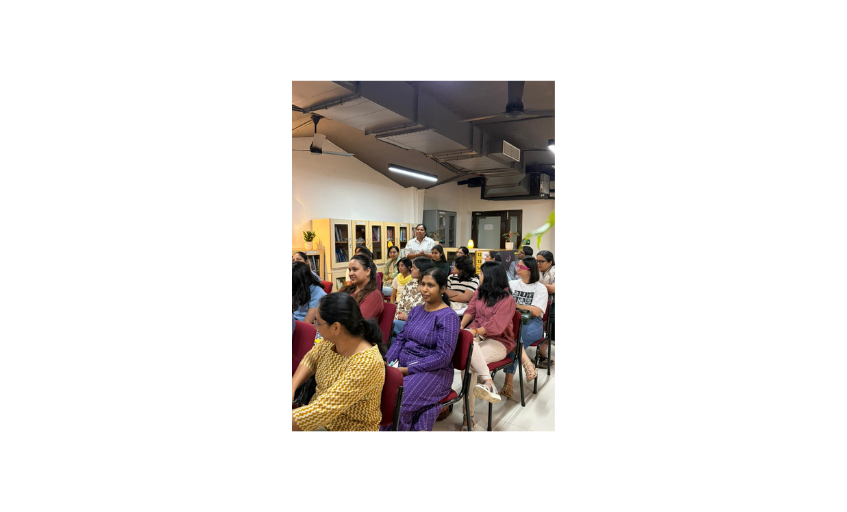
As the discussion unfolded, the room moved seamlessly between laughter and reflection.There was curiosity about the role of men — not passive spectators, but allies shaping equitable scientific spaces.
There were reflections on legacy — not merely achievements, but permission for the next generation to choose boldly and define success independently. Workplace culture emerged as critical. Supportive co-workers and mentors can transform demanding environments into spaces where ambition feels sustainable.
Science communication found its rightful place — because science unseen is science underleveraged.And privilege entered the dialogue with nuance. Privilege is contextual, unequal, deeply personal. Different starting points do not invalidate merit, nor do advantages erase effort.
Different journeys. Equal legitimacy.
Full Circle
By the end of the session, the mood felt unmistakable — lighter, warmer, reassuring. What lingered was not just inspiration, but relief. A reminder that science is not a rigid track, that careers are allowed to bend, and that nonlinearity is not failure but reality.
Build your own path. Do you. You are the driver of your life. Perhaps the most fitting closing note was the one the book itself offers:
"To girls and women across the world who want to be scientists — more power to you."
Not advice. Not instruction. A salute.
Because one talk — or one blog — is rarely enough.
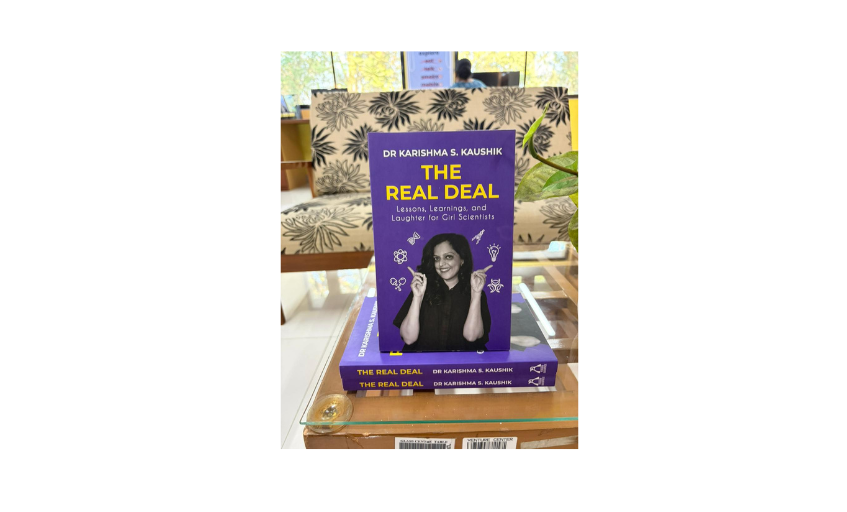
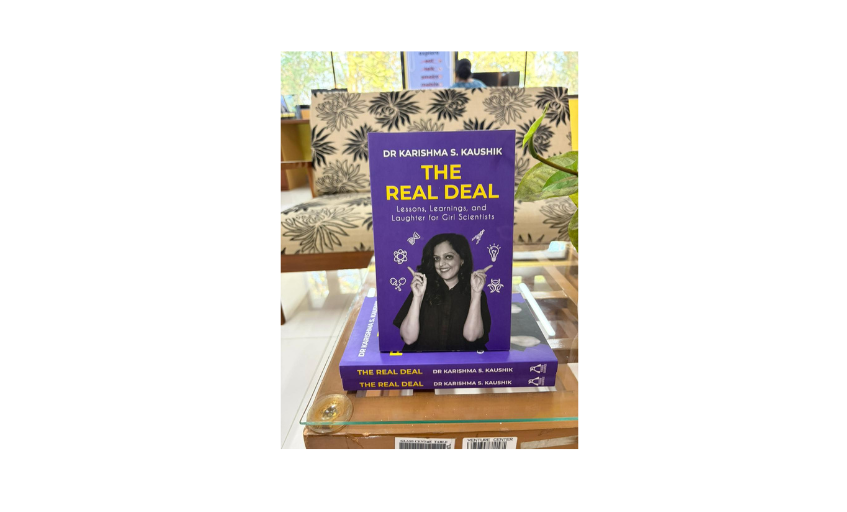
Dive into The Real Deal – Lessons, Learnings and Laughter for Girl Scientists, available on Amazon.
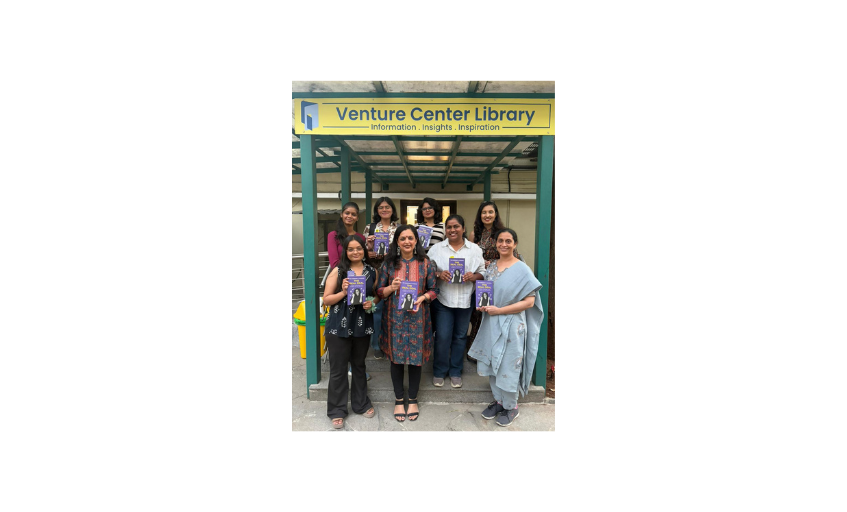
Pipettes in the lab, books in the library, balance in life, become a Venture Center Library member
Lessons in the book, conversations on WhatsApp