


“Projects are no longer side activities. They are how strategy gets delivered.”
As organizations grow more complex and uncertain, traditional operating models struggle to keep up. Strategy alone is no longer enough. What determines success is how effectively intent is translated into action—through the projects that shape priorities, allocate resources, and ultimately define outcomes.
When Strategy Finally Touches the Ground
Every organization has strategy. Not every organization sees it come alive.
Somewhere between leadership intent and day-to-day execution, value often thins out—broken into tasks, timelines, and reviews that look productive but feel disconnected from outcomes. The last few years made this fracture impossible to ignore. As COVID-19 reshaped how people worked, projects multiplied. Work moved home. Delivery accelerated.
Yet a quieter question began to surface : were organizations creating value, or simply completing work?
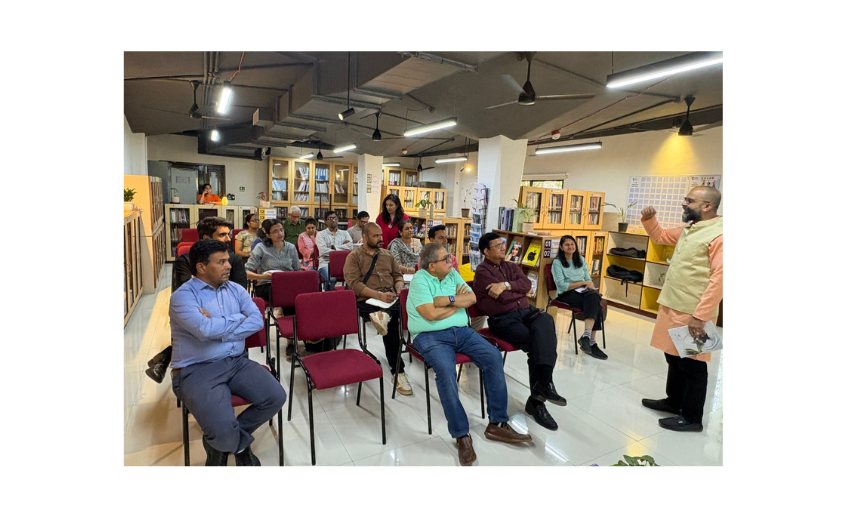
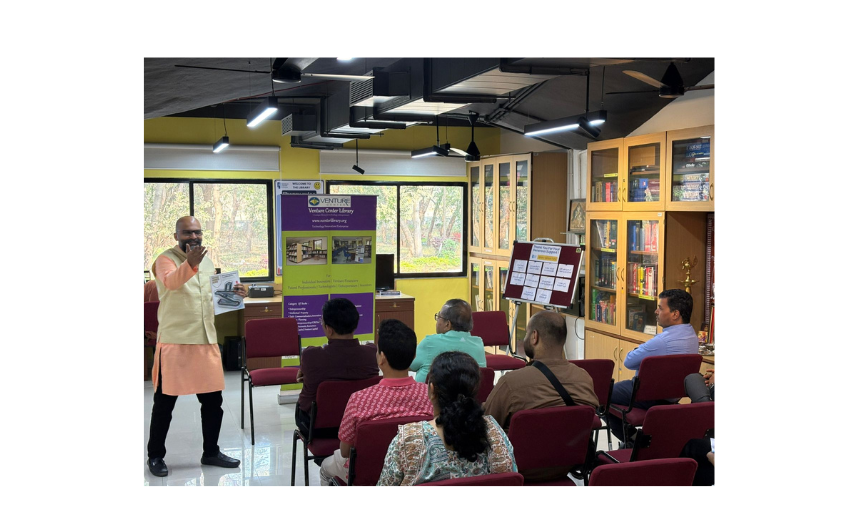
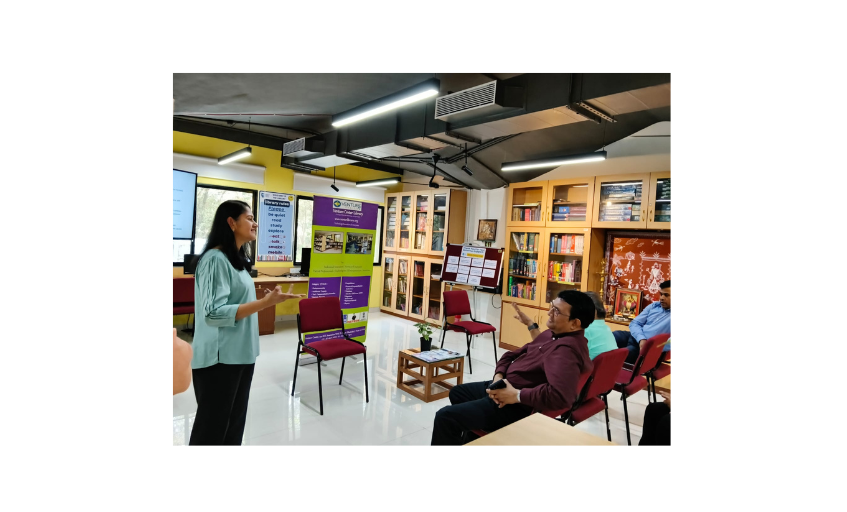
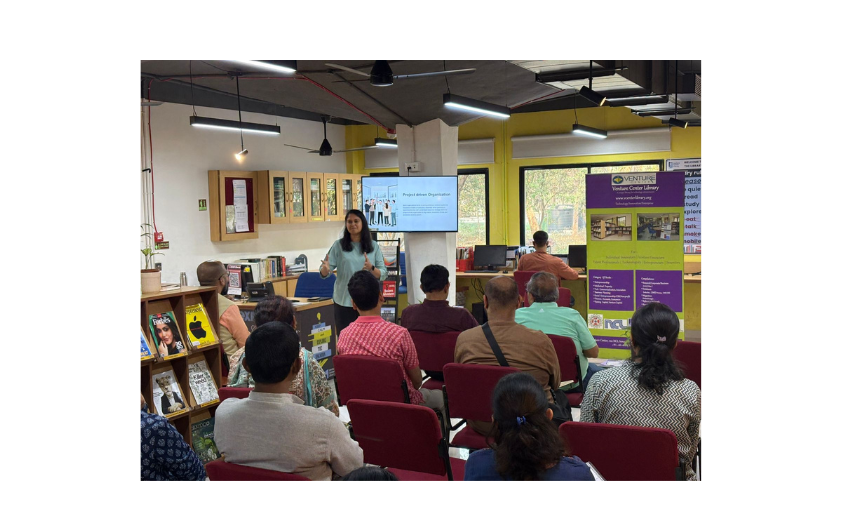
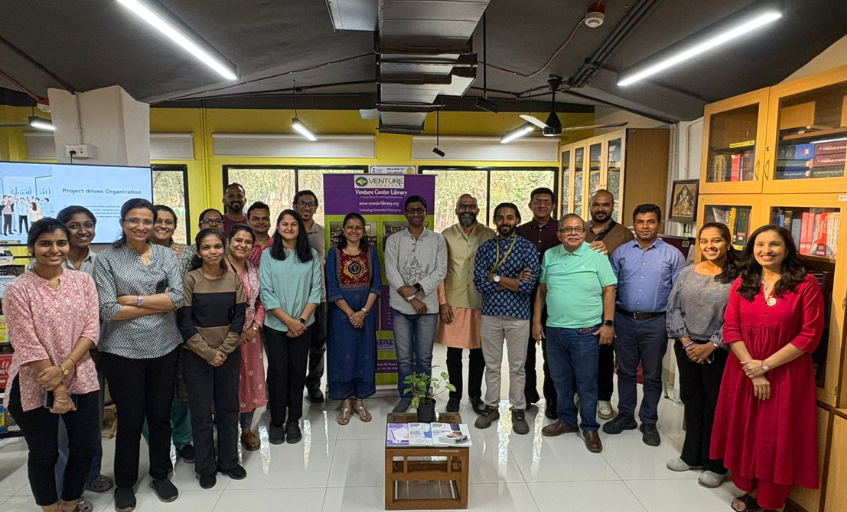
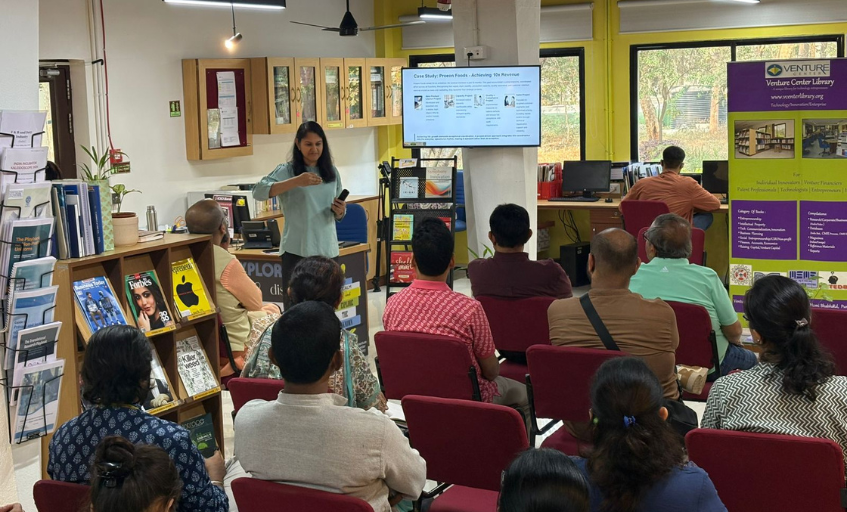
This tension framed Venture Center’s 4th Journal Club, which used the Harvard Business Review article The Project-Driven Organization as a starting point—not a conclusion. The article makes a decisive claim: projects are no longer peripheral initiatives layered onto operations. They have become the primary mechanism through which strategy is executed and value is created.
When Projects Become the System
That shift—from projects as support to projects as structure—was unpacked through lived experience by Jagadish Bennale.
Reflecting on the pandemic’s impact, Jagadish highlighted how remote work accelerated reliance on projects. Teams moved faster, hierarchies softened, and initiatives proliferated. But commitment expanded faster than capacity. Resources were dispersed. Priorities blurred.
What looked like momentum often turned out to be motion without meaning.
Projects multiplied. Tasks filled calendars. Completion quietly began to substitute for contribution.
Busyness, Complexity, and the Cost of Not Stopping
A sharp insight from the discussion was how easily activity masquerades as impact. Dashboards grew fuller, yet the link between effort and outcome weakened.
Closely tied to this was the myth that only long, complex, exhausting projects are worthy of recognition. Difficulty became a proxy for value. But complexity is not value. Outcomes are.
Equally damaging is the inability to end projects well. Many continue long after their usefulness has expired—budgets depleted, assumptions invalidated, teams stretched thin—because no one feels empowered to conclude them. Projects survive on inertia rather than intent.
Knowing when to stop is not failure. It is a strategic skill.
What the Case Studies Make Clear
The strength of The Project-Driven Organization lies in how it grounds these ideas in practice.
At Haier, projects operate like micro-enterprises. Teams are given autonomy, accountability, and direct visibility into the value they create. Decision-making sits close to execution, allowing strategy to translate quickly into action.
At Schmitz, projects act as connectors across complex engineering and customer needs, ensuring work does not fragment into silos. Fewer initiatives are prioritised, but each is tightly linked to outcomes.
Revol shows how shorter, outcome-driven projects enable adaptability in competitive markets, while Bayer demonstrates that even large, regulated organizations can prevent strategic drift by anchoring ownership and value clearly within projects.
Across these cases, one pattern holds: projects are bounded, ownership is clear, and value—not effort—is the measure of success.
End-to-End Accountability, in Practice
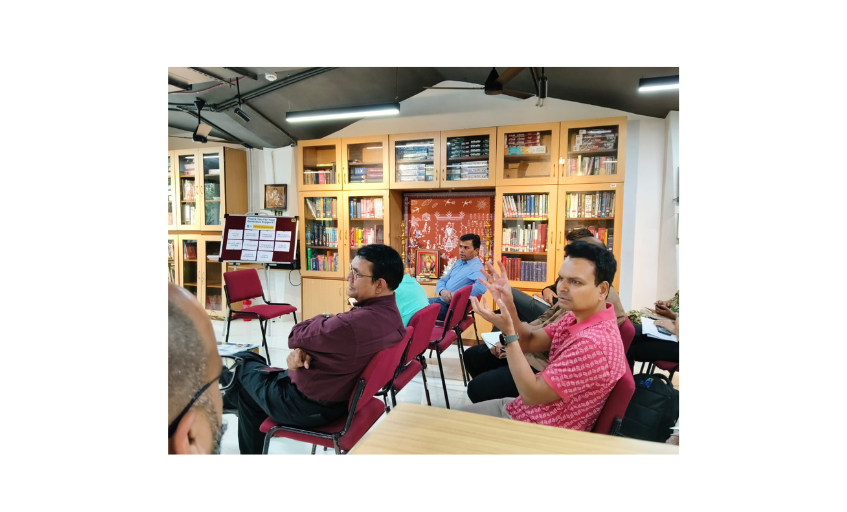
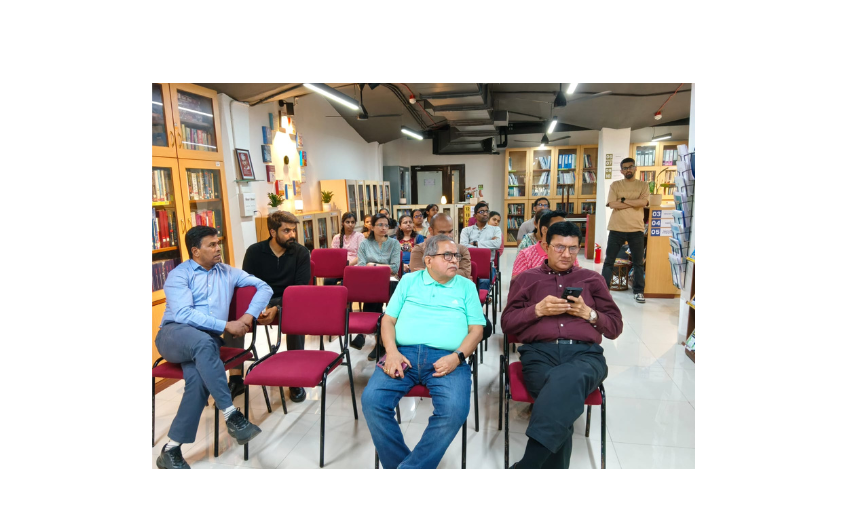
The discussion deepened when Anuradha Chitnis, R&D Lead at Proeon, shared her experience from within an operating organization.

She highlighted a familiar structural gap. Goals are set at the top, execution happens downstream, and accountability rarely flows end to end. When teams work in isolation, ownership fragments and learning dissipates.
At Proeon, project choices are shaped by readiness, client feedback, and rigorous evaluation. Projects are taken up not because they are ambitious, but because the team is mature enough to deliver them well. Focus sharpens. Noise reduces. Accountability holds.
Movement, Grounding, and the Space Between
Progress does not necessarily demand restlessness. Reaching new shores does not require abandoning the ground already gained. There is value in exploration, and equal value in knowing when to plant roots. Stability, when paired with intent, allows learning to compound rather than reset.
The most resilient organizations are not those that chase novelty endlessly, but those that balance exploration with continuity. They allow projects to move, adapt, and even conclude, while remaining anchored to a shared sense of purpose, direction, and accountability.

For an ecosystem like Venture Center, this balance is not theoretical. Much of the work here unfolds through projects shaped by uncertainty—early experiments, first validations, regulatory pathways, scale-up attempts. Teams move together toward common goals, knowing that iteration is part of progress and that risk is something to be navigated, not avoided.
At the same time, movement does not come at the cost of grounding. As projects evolve and new ones begin, learning carries forward. Relationships deepen. Capabilities take root. Exploration is paired with continuity, allowing progress to build rather than reset.
This balance—between movement and grounding, between change and coherence—is where project-driven thinking finds its real strength.
When teams know why they are moving, where they are headed, and when it is time to pause or conclude, projects stop being bursts of activity. They become deliberate acts of value creation.
In that space, strategy no longer feels distant or abstract.
It feels lived. Revisited. Strengthened.
Before ideas turn into projects, they deserve good reading—become a member of our library.
Join our WhatsApp community to stay close to our Journal Club conversations.