

What if a board game could tell you more about a person than several months of exchanging office pleasantries? What if, somewhere between rolling a dice and climbing a ladder, you found yourself discussing your childhood, your questionable decisions, your dreams and, occasionally, your capacity to hold your breath?
That is more or less what happened when the Venture Center Library hosted a session of Moksha Trek on October 30, facilitated by its creator, Falguni Gokhale. A designer, visual communicator and artist, Falguni has reimagined a traditional Indian board game, bringing together philosophy, reflection and a fair bit of fun. And she has managed to make soul-searching considerably more inviting than it sounds. Because who said a little soul-searching had to be a serious affair?

Before Snakes and Ladders, There Was a Journey to Moksha
Most of us know the drill. Roll the dice, move your token, climb a ladder if fortune favours you and slide down a snake if it does not. The objective is straightforward: reach the finish before everyone else. Except that the game has a rather more philosophical family history.
Its Indian antecedents include Mokshapatam and Gyan Chaupar, traditional board games that turned the journey across a numbered grid into a metaphor for life. The game is popularly attributed to the thirteenth-century Marathi saint and philosopher Sant Dnyaneshwar, although its precise origins remain debated. Ladders represented virtues such as generosity, devotion and knowledge, while snakes represented vices such as greed, anger and vanity. The ultimate destination was Moksha: liberation from the cycle of birth and rebirth.
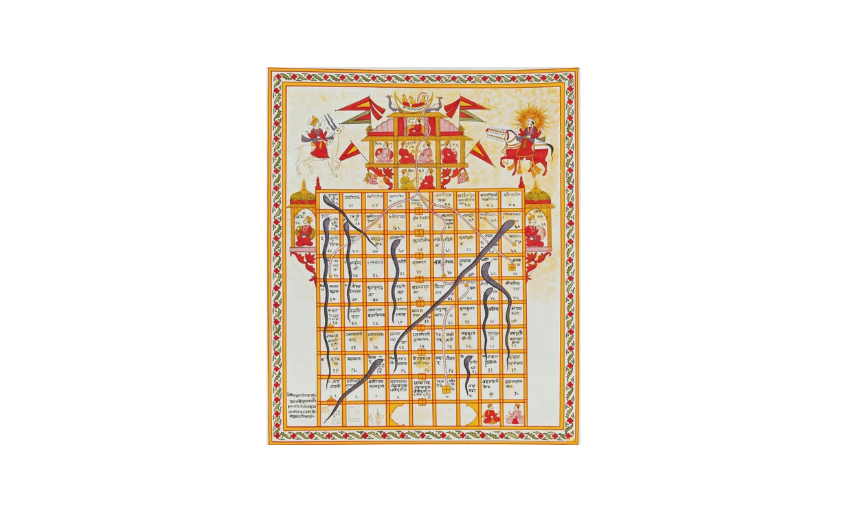
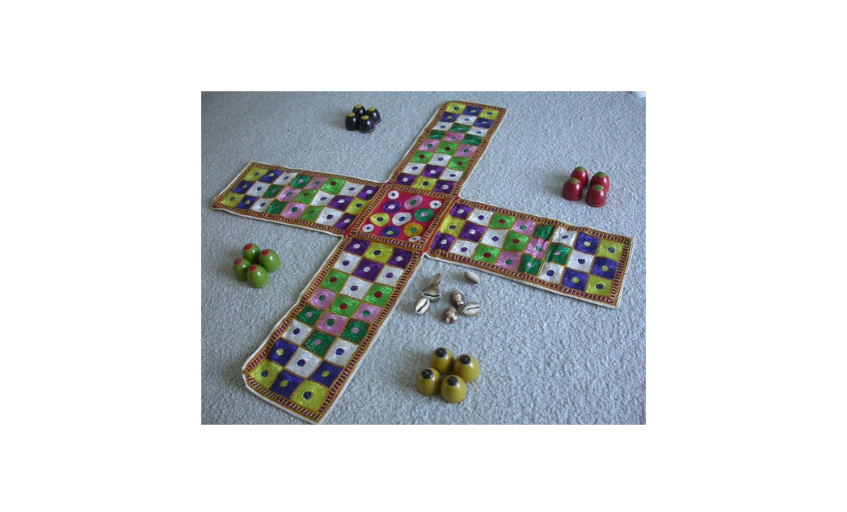
The game eventually travelled to Britain in the nineteenth century. By the 1890s, it had been adapted into a game that reflected Victorian moral values. Much of its elaborate spiritual vocabulary was replaced by simpler illustrations of virtue and vice, and eventually, even those lessons began to disappear. A philosophical map of existence had become a children's game. Quite the career change.
Seventy-Two Squares and Plenty to Think About
Moksha Trek has 72 squares, a format commonly found in Hindu versions of Gyan Chaupar, arranged in eight rows and nine columns. Some interpretations connect this number to the 72,000 nadis, or subtle energy channels, described in Indian spiritual traditions. Jain versions, meanwhile, commonly featured 84 squares. Clearly, even the journey to enlightenment came in different editions.

Moksha Trek brings this philosophical inheritance into a contemporary setting. Its squares carry words, values and situations that ask players to do considerably more than move a token. Land on Gratitude, and you might find yourself thanking someone in the room. Land on Resilience, and you could be sharing a challenge you overcame. Hypocrisy asks you to examine whether your actions have always matched your beliefs. Suddenly, the dice are the least intimidating thing on the table.
A Little Therapy, Disguised as a Game
The lotus-marked squares are where much of the fun unfolds. They invite players to reflect, share, perform an activity or respond to different prompts. You could be discussing attachment one moment, describing your sky-high dreams the next, or offering someone a genuine compliment.
There is even a square called Air, which gives you the choice of behaving like someone's royal servant for fifteen seconds or producing a convincing burp. It is reassuring to know that the path to self-discovery leaves room for such essential life skills.
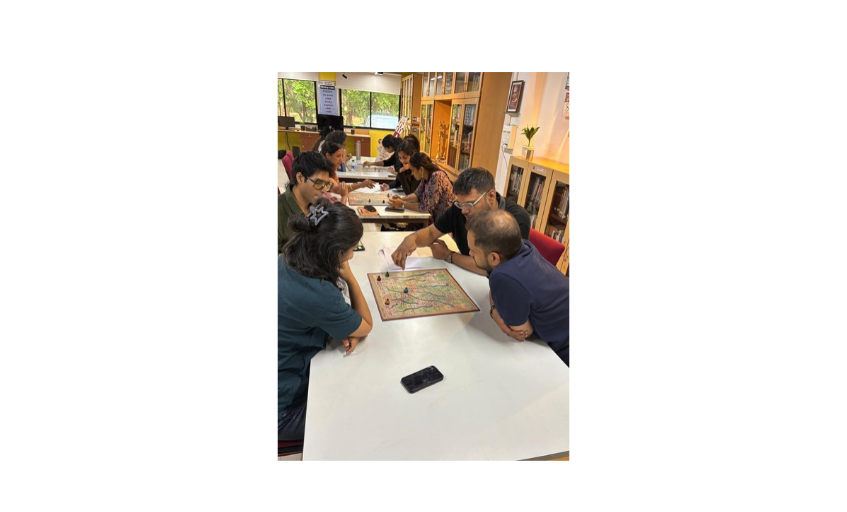
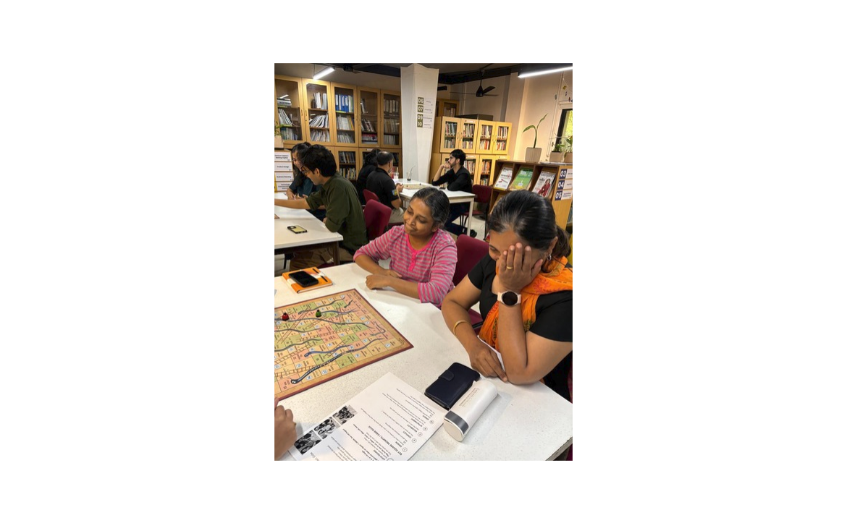
But beneath the humour is something rather meaningful. The game creates an unusual shortcut through introductions. People who might otherwise exchange little more than their names and designations begin sharing memories, beliefs, fears and aspirations. It is a surprisingly effective way to get to know someone without resorting to the familiar interview question, 'So, tell me about yourself.'
Played with openness, it can feel almost therapeutic. Not in the clinical sense, but in the simple human pleasure of being heard, listening to others and discovering that everyone has their own assortment of ladders and snakes to negotiate. Philosophy becomes accessible without turning into a lecture, and introspection does not feel like homework.
Moksha Is Better When Everyone Gets There
Perhaps the most thoughtful rule comes at the end. Reaching the final square does not mean you get to put your feet up while everyone else struggles along. Players who reach Moksha continue rolling the dice, this time to help others progress. The game ends only when everyone has arrived.
There is something lovely about that little twist. After all the individual moves, personal victories and occasional setbacks, the final lesson is about helping someone else along.
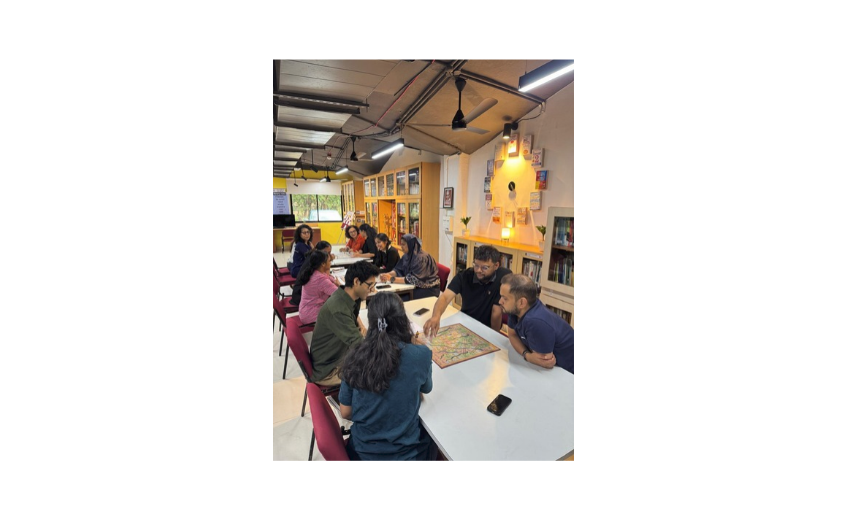
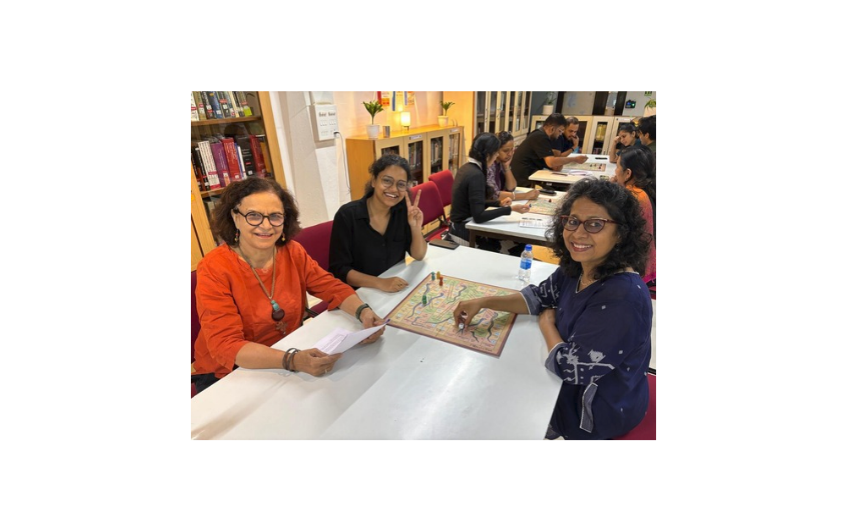
At the Venture Center Library, we spend plenty of time surrounded by books, ideas and knowledge. Moksha Trek offered a rather different way to explore all three: one roll, one conversation and one unexpected revelation at a time.
And if there is one thing the afternoon established, it is that you do not always need to ask someone what they do to get to know them. Sometimes, it is enough to ask what they would wash away if they landed on Water.
Just remember to be prepared for the answer.
Your journey through ideas does not have to end at the last square! Take another step towards discovery with the Venture Center Library. Explore our collection through KOHA, our online library catalogue, and join our Library WhatsApp Community to stay updated on new additions, activities and upcoming sessions. There are plenty more ladders to climb and stories to uncover. Who knows what you might stumble upon next?